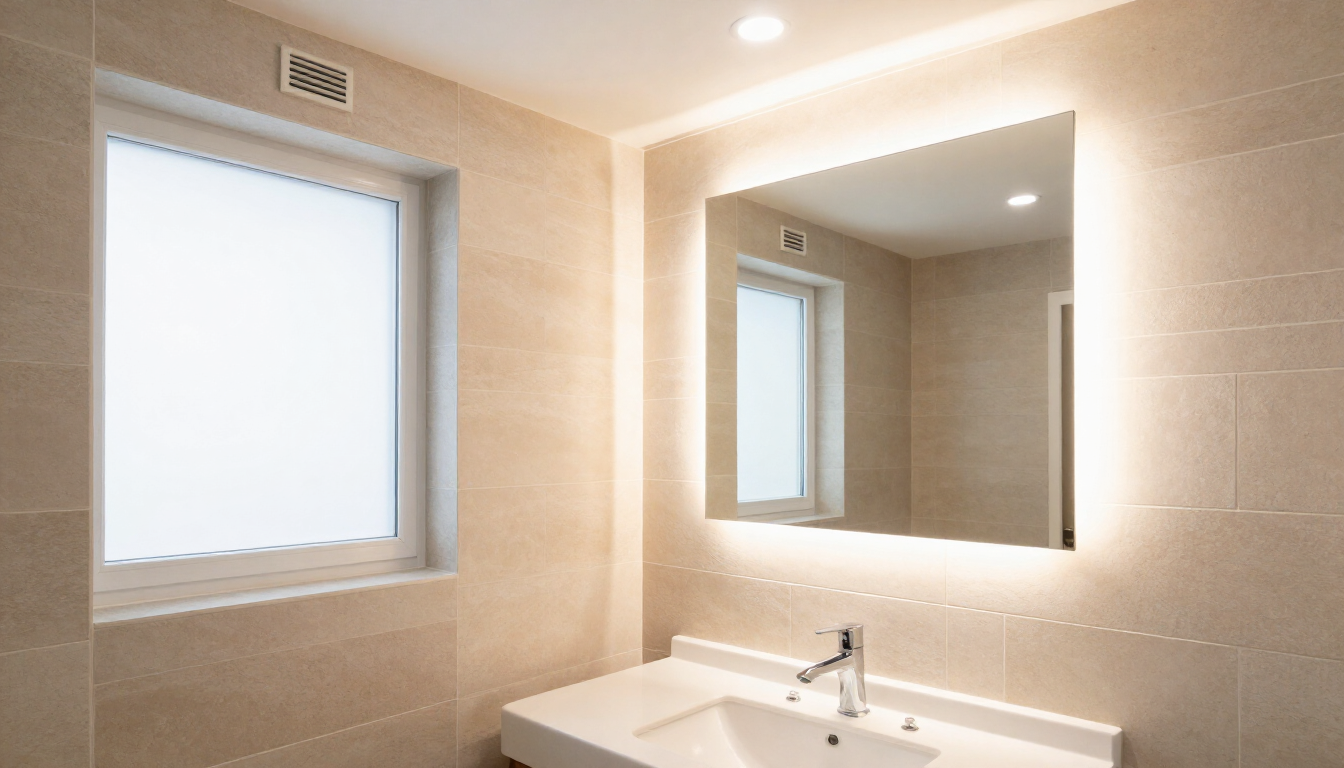
Light the person at the mirror.
A bathroom without a window is not required to feel dark. It does require a lighting plan and a real path for moist air to leave. A single ceiling fixture rarely does either job.
01Light the person at the mirror
Mirror light should fall on the face, not only on the ceiling. Place it so the person using the mirror is readable, and keep a separate control for a quieter night level. A brighter ceiling is not a substitute for light at the glass.
02Give the shower and corners their own attention
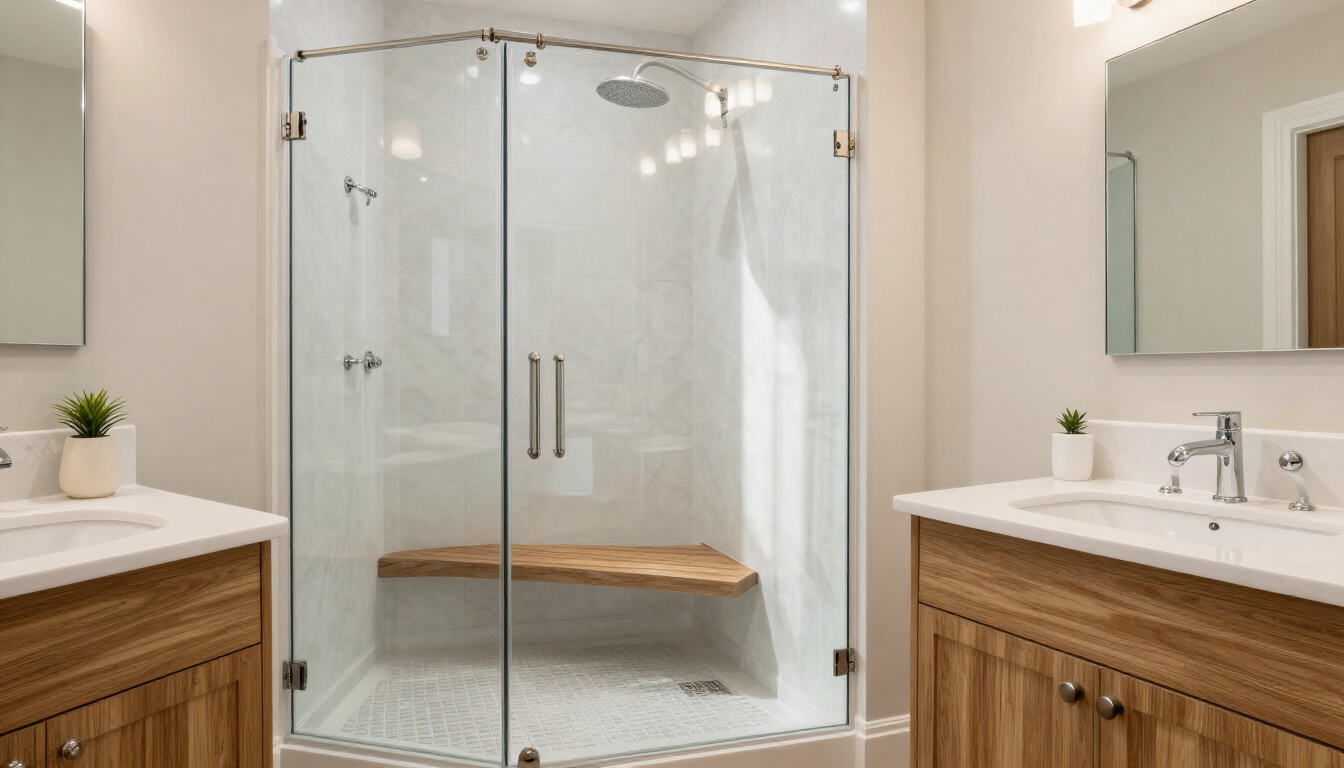
The shower, the entry and the corners need to be readable when the room is wet. A light aimed only at the mirror leaves the wet area dim. Plan those layers together, including how they are switched.
03Use finishes to reflect light without glare
A pale surface can help a windowless room. A glossy one can also mirror the only light source into your eyes. Look at samples under the lights you plan to use. Colour and sheen are separate decisions.
04Verify where moist air actually goes
A fan in the ceiling is not ventilation until you know where it discharges. Ask whether the duct leaves the building or only moves air into another cavity. Have the existing route checked before the new finish closes the ceiling.
Balance mirror, room and shower lighting while verifying that bathroom ventilation removes moisture through an appropriate, functioning route.The Sarokey approach
05Coordinate controls and maintenance
The fan, the mirror light and the room light should be understandable on an ordinary morning. Access for cleaning or replacing the fan belongs in the plan. A windowless bathroom stays comfortable only if both the light and the air can be operated without a guess.
Further reading
Planning guidance only. Requirements vary by address and scope. Illustrations are not documented Sarokey projects.
EPA · Lead-safe renovation planning